
Teaching Camping Hazards with GIANTmicrobes
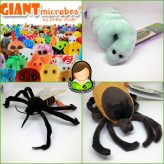

 It’s almost time for Summer Camp! Which means there’s no time like the present to start teaching younger girls about the importance of insect repellent
These fun plush toys are a million times larger than the actual organisms and cells that they represent. They are a tactile way to teach kids about health, their bodies, and their environment without complicated technical drawings. GIANTmicrobes was good enough to provide Girl Scout Guide with a plush mosquito, tick, and Lyme Disease in their original 5″ size complimentary to spread the message!
Mosquitoes!
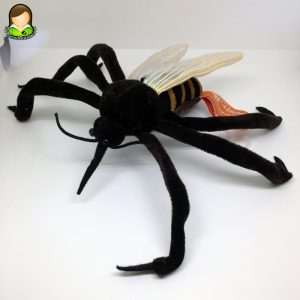 As I mentioned, these plush pests are 5″. They’re are 3,000 species of mosquito, but the most common are Culex pipiens. Only the females bite, sucking your blood like tiny vampires! Girls going off to camp need to know that they can get some nasty infections and viruses from mosquitoes, so regularly applying a good insect repellent is very important, for more than just avoiding itchy bites!
Mosquitoes can carry malaria, yellow fever, and West Nile Virus. Insect repellents with diethyltoluamide (DEET), lemon eucalyptus, or picaridin are the most effective to keep mosquitoes away while your girl is having fun on the lake with her new camp friends!
Ticks!
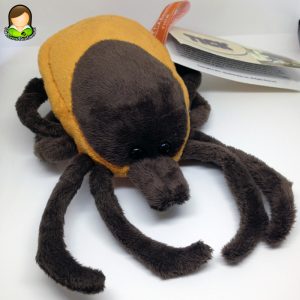 These slightly larger little vampires can be found in deep woods and grassy plains. Ticks can be as large as grapes or as small as a pinpoint, but all can carry diseases. Ixodes scapularis, their scientific name, are actually not insects, but arachnids more closely related to spiders. These little buggers can carry tularemia, Rocky-Mountain Spotted Fever, and most famously Lyme Disease.
Girls should always check for ticks after prolonged time in the woods, like camping in deep woods or a hike through. There is ample time to remove ticks before they can transmit these diseases. While there are many remedies floating around that involve heated pins, matches, or gasoline, all of these should be avoided as they can drive the tick further into the skin. The best method of removal is to grasp the tick with tweezers, as close to the skin as possible, flip it onto it’s back slowly (you don’t want to dislodge the “head”, or mouthparts, from the skin) and pull gently until it’s removed. Washing the area with alcohol
Lyme Disease!
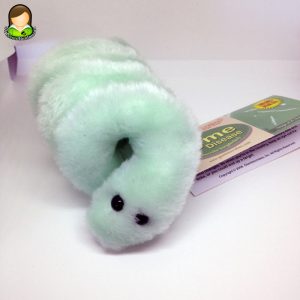 One of many diseases that can be transmitted by ticks, Lyme Disease is the most commonly reported tick-borne illness. This disease is initially identified with aches, fever, fatigue, and the signature bulls-eye shaped rash at the site of the tick bite. Antibiotics can help, however Lyme Disease is sometimes hard diagnose quickly as it can be misdiagnosed. This disease can lead to more problems later in life like arthritis, facial paralysis, meningitis, and more. Some victims of Lyme Disease can also develop cognitive issues like memory loss and mood changes.
Lyme Disease is diagnosed in approximately 300,000 people in the United States according to the Centers for Disease Control and Prevention. LymeDisease.org has published a Lyme Disease symptom checklist that all campers should be familiar with. All leaders and camp counselors should also be diligent with checking for ticks after extended periods of time outdoors and should know what to do if they find a tick to avoid this disease.
Each GIANTmicrobes toy comes with some facts about the microbe in the tag and their website has lots of information about the organism as well. All of these facts will help with teaching your girls about not just how important insect repellent or checking for ticks can be, but with their wide selection you can use these plushy germs to teach them all kinds of lessons!
Read MoreReview: Quick Stitch Sewing Kit
 We don’t have to tell you that the Girl Scout motto is “Be Prepared”. The motto, as explained in the 1947 Girl Scout Handbook, means “A Girl Scout is ready to help out wherever she is needed. Willingness to serve is not enough; you must know how to do the job well, even in an emergency.” One of the things we can often forget in our quest to be prepared are that rips and tears can happen, and sometimes a safety pin is not enough!
Here at Girl Scout Guide we were given a Quick Stitch Sewing Kit complimentary to review. Having a sewing kit on hand is very important in all activities and travel – from troop camping trips to day trips, weekly meetings to awards ceremonies. You never know when a badge might come loose or an inconvenient hole may need a few quick stitches on the trail.
Product Specs
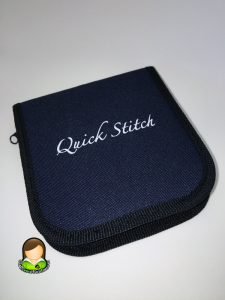 The Quick Stitch Sewing Kit is compact for sure – measuring at 4.5 x 0.8 x 4.8 inches it weighs just 3.7 ounces according to my package scale. It’s easily slim enough to fit unobtrusively in any duffle bag, backpack, or suitcase. It contains 24 stainless steel needles in 8 sizes contained in a plastic case, 12 spools of thread in assorted colors, stainless steel scissors, a seem ripper with plastic cover, 2 aluminum needle threaders, a tape measure, 2 straight pins, 3 white opalescent buttons, a safety pin, and a thimble. It retails on Amazon for $11.95.
The kit we received was actually missing it’s thimble, which isn’t a big deal to us because none of us use one, but it might be a big deal to you if yours comes up missing.
Usage
For all that’s contained within this kit, it’s remarkably lightweight. It doesn’t add any bulk to a day pack or even a larger purse, though it might be somewhat cumbersome for a fanny pack or smaller purse if you travel light on troop outings. It is relatively thin, so it can easily tuck into some pockets out of the way within those larger bags.
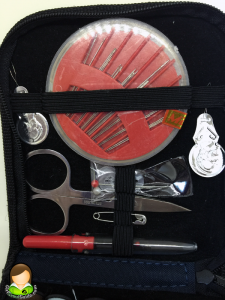 A distinct downside is that there’s only one lonely safety pin. Being the all-stars of any travel emergency, safety pins are invaluable when on the go, so we recommend tossing a few extra into your kit before heading out. While small, there’s still plenty of room within the zippered walls of this kit to hold some extras.
The stainless steel scissors are a HUGE bonus and very easily justify the price. Yes, you can get less expensive travel sewing kits, but those flimsy scissors won’t work if some serious repairs are needed while out with your troop on a hike, day trip, or other situation where you may not have a real pair of scissors around otherwise. The seem ripper is also handy to clean up a mending job and not necessarily have to do more serious repairs once you get back home. It’ll be like it never happened!
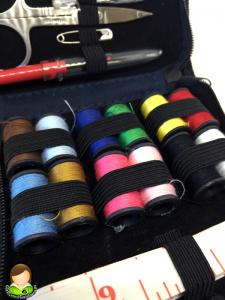 The variety of threads is nice, though they are rather small spools. They include your basic primary colors, the required black and white, and even some pastels and browns to cover your bases. There’s no orange or purple, but if you find yourself using more oranges and purples and less of the other colors, you could probably substitute some spools from cheaper travel kits or throw in a wound bobbin from home.
The zipper is secure, so even if you include some other odds and ends like we’ve recommended, they won’t end up falling out all over your bag waiting to stab you or get tangled up in a zipper. The kit has hard sides, so you don’t have to worry about those pointy scissors poking through either.
Verdict
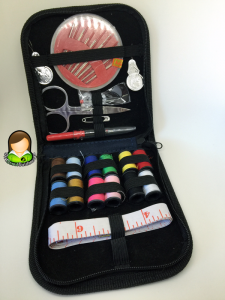 Whether you’re going out for the day with your troop on an adventure, or spending a few days reconnecting with nature on a camping trip, we highly recommend having this Quick Stitch Sewing Kit on hand. If the size is a little big for the type of bags you like to travel with, it’s also a handy item to have with your regular meeting supplies or “backstage” for an awards ceremony to fix up your uniform and patches in a pinch. The price might be a little high for you, but it’s actually on the less expensive spectrum of kits with comparable items inside that are on the market, so it is the best value for your troop budget dollars.
Create Summertime Memories with National S’mores Day on August 10
Hershey’s Milk Chocolate Celebrates by Partnering with TheMotherhood to Inspire Families to Share Special Moments with S’mores
National S’mores Day is August 10, and there is no better way to celebrate the occasion than with the delicious combination of purely delicious Hershey®‘s Milk Chocolate, crisp graham crackers and toasted, gooey marshmallows. This summer, Hershey’s Milk Chocolate has partnered with influential social media moms from TheMotherhood, an award-winning web community of 13,000 mothers, to provide sweet and easy tips for families to celebrate National S’mores Day and enjoy S’mores all season long.
“National S’mores Day is another great reason to gather family and friends to enjoy this classic summertime treat,” said Emily McKhann of TheMotherhood. “Combining Hershey’s Milk Chocolate, graham crackers and toasted marshmallows is the perfect way to sweeten any summer day and create lasting memories.”
Tips for Creating S’mores Smiles
S’mores have been a centerpiece of summertime since the recipe was first published in the Girl Scouts handbook in 1927. The classic treat is fun to make and offers families and friends an activity they can enjoy together. Below are some quick and easy tips for enjoying S’mores on National S’mores Day and everyday:
- Family Activity S’mores – Make S’mores a family activity by getting everyone involved. Little ones can be in charge of assembling the graham crackers and Hershey’s Milk Chocolate bars while adults and older children take care of roasting the marshmallows. Once your S’mores are ready, dig in and enjoy this tasty treat together.
- Grilled S’mores – For a fun new way to enjoy S’mores, try making them on the grill! Simply wrap S’mores in aluminum foil and place on a medium-hot grill and cook 1 to 2 minutes on each side. When you’re done you’ll have S’mores that are grilled to perfection.
- Party with S’mores –The next time you’re invited to a summer party, bring S’mores ingredients as your contribution to the gathering. Guests will love making gooey S’mores and you’ll be a hit at the party.
- Summer Vacation S’mores – S’mores aren’t only for camping! Many hotel chains offer fire pits or grilling areas which are perfect for making S’mores to help sweeten your trip and create a new family tradition. Staying home this summer? You can also build S’mores at the park or playground in the designated picnic or grilling area.
Say S’mores and Share Memories
This summer, families can showcase their favorite S’mores memories by visiting Hershey’s Facebook page at www.facebook.com/hersheys to download the Say S’mores application. Families are invited to participate in monthly themed photo contests for a chance to win S’mores-themed prizes, including a camera, photo printing gift card, outdoor fire pit, roasting skewers and all of the ingredients needed to make S’mores.
For more tips on creating S’more’s summertime memories or to participate in the Say S’mores photo contest and view official rules, please visit the Hershey’s brand Facebook page at www.facebook.com/hersheys.
SOURCE The Hershey Company
Save 10% at HersheysStore.com! Enter Code HERSHEYSAVE. Offer Expires 9/30/2011.
Free Printable Camp Packing List
Summer camp was the best times I had in Girl Scouts. I started going to camp at 8, continued through high school in the Counselor-in-Training program, and worked as a counselor the first summer after high school.
Want to share photos of your troop or group at camp? Contact Us!
This fantastic resource for girls on their way to camp was shared with me. It’s a free, printable packing list. Included in this article are great tips for keeping the list durable so your girls can not only make sure they have everything they need before heading off to camp, but also make sure they didn’t leave anything behind when packing to come home!
Read MoreGirl Scouts of Northern California – Save Your Camps!
This is a guest post by Janeen Vitalie-Shember from Girl Scouts of NorCal-Save Your Camps!
It started out as a group of us at a service unit team meeting lamenting – of course! What we were lamenting was that the Girl Scouts of Northern California was reviewing all of our camp properties and talking about mothballing them, or worse, selling them. And while our Council Delegate was talking about all of the questions he’d been asked to present to us, and how small the delegate participation had been on the Council-run conference calls to talk about the situation, we realized that we really didn’t have a voice at all. We realized that there were thousands of us in the Northern California Council, with a couple of dozen Council Delegates to represent us, of which only a handful had called to participate in this crucial discussion.
So like every good Girl Scout, I decided to “take action”. I set up a Facebook group – Girl Scouts of NorCal-Save Your Camps! What better way than to provide a forum for everyone to come together to share thoughts and ideas, get connected and be heard. Then I started to spread the word, starting with my Facebook friends, troop families and spreading out to all of the leaders in my service unit. Those leaders told their troop families and friends. And soon Girl Scout leaders and alums, parents and husbands, were joining the group to show their support and share their belief that our camps are a precious commodity to be preserved.
As more and more people have joined the group, it has become an easy access point for information – Marina Park is a member of the group and posts regular updates and links to Council data. We have had discussions of solutions to the maintenance “gaps” at our camps – and have seen the launch of the “Tents and Trails” campaign. It’s been exciting to read people’s stories of their own camp experiences, and their wishes for their own daughters to have the same experiences.
In a few short months the group has grown to 194 members, and there is plenty of room to grow. I’ve set the challenge – 250 members by Labor Day. So if you feel passionately about camping, the outdoors, and the Girl Scouts’ heritage of custodians of open spaces, join – post – spread the word – be heard.
Read MoreDeveloping an Emergency Action Plan
Whenever going into the great outdoors with a troop, it’s important to develop an Emergency Action Plan, or EAP. An effective EAP must be simple, easy to remember, and in writing. Y0u should make an EAP clear for all girls, volunteers, and event staff to understand. A EAP should include these general features:
- How the person who recognizes the emergency is to signal others.
- The steps each person should take in an emergency.
- The location of rescue and safety equipment.
- Actions to minimize the emergency and safely rescue any victims.
- How to call for medical assistance when needed.
- Follow up procedures for after the emergency.
All adults should be briefed in detail what to do in case of an emergency with the troop. Depending on the age of the girls, you can brief them at the same time if they’re older and can understand the details, or you may choose to brief younger girls separately using language they can more easily understand.
When you put your EAP into writing, consider including any of the applicable following sections:
- Layout of facility/environment.
- EMS personnel access and entry/exit routes.
- Location of rescue and first aid equipment.
- Location of telephones, with emergency telephone numbers posted.
- Location of keys for buildings or rooms with telephones or emergency equipment.
- Exits and evacuation routes.
- Equipment available.
- Rescue equipment.
- First aid supplies.
- Emergency equipment, such as flashlights or fire extinguishers.
- Support personnel available.
- Internal.
- Staff members.
- Troop leaders.
- Volunteers.
- Clerical personnel.
- Maintenance personnel.
- External.
- EMS personnel.
- Police officers.
- Fire fighters.
- Hazardous materials (HazMat) team.
- Poison control center.
- Hospitals.
- Power and gas companies.
- Health department.
- Search and rescue team.
- Internal.
- Staff responsibilities.
- Assign each adult a duty:
- Provide care.
- Control bystanders and troop.
- Meet EMS personnel.
- Interview witnesses.
- Assign each adult a duty:
- Communications.
- How and when to call 9-1-1 (or other local emergency number), and who will make the call.
- Chain of command.
- Personal to contact family/parents.
- Person to deal with media.
- Follow up.
- This includes items such as EAP documentation and evaluation.
Clearly, some of these sections do not need to be included for a day trip to a public, controlled area (such as a pool or water park). They should all be included when taking an extended trip or a trip to a more remote area, like a day hike or weekend long camping trip.
For more, read Basic Water Rescue


